
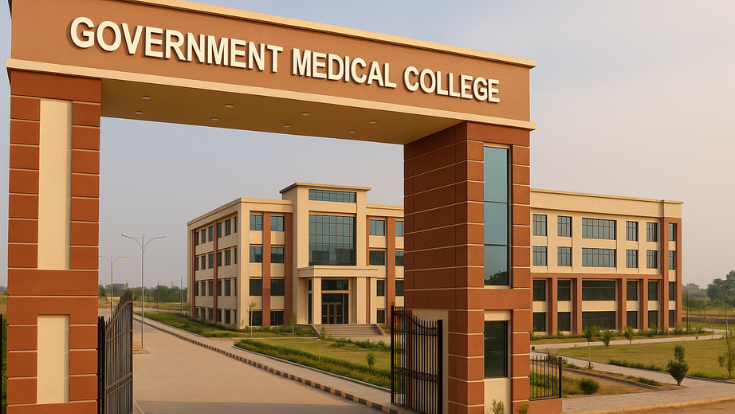
MBBS Admission in India: A Practical and Honest Guide for Students and Parents
Choosing to pursue MBBS Admission in India is not just an academic decision; for many families, it’s an emotional and financial commitment. I’ve seen students prepare for years with a single dream of becoming a doctor, and I’ve also watched parents make sacrifices in ways their children may never realise. So, if you’re reading this as a student or a parent, it’s natural to feel both excited and overwhelmed.
The medical field in India is respected and stable, but the path to admission can feel confusing if no one explains it clearly. This guide is written in a way that avoids jargon and unnecessary complexity, so you understand the actual process of getting an MBBS seat in India, without the noise.
Whether you are starting your NEET preparation, waiting for results, or figuring out counseling, this blog gives you clarity, realistic expectations, and practical guidance.
What MBBS in India Really Means
MBBS stands for Bachelor of Medicine and Bachelor of Surgery. It’s the undergraduate degree required to become a licensed medical doctor.
In India, the MBBS course runs for 5.5 years:
- 4.5 years of classroom + clinical learning
- 1 year of compulsory internship
Students go through different phases of learning:
- Pre-clinical subjects (like Anatomy, Physiology, Biochemistry)
- Para-clinical subjects (Pathology, Pharmacology, Microbiology, Community Medicine)
- Clinical subjects (Medicine, Surgery, Pediatrics, ENT, Ophthalmology, Gynecology, and more)
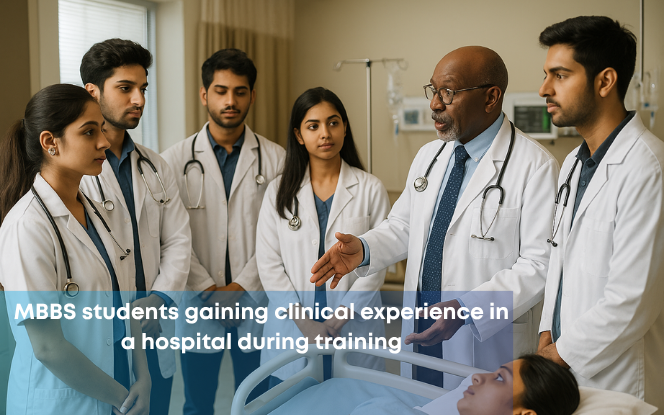
By the end of the internship year, a student is exposed to hospital rounds, case handling, interacting with patients, and learning the responsibility that comes with human life. Most doctors later say that the internship year is what truly shapes them.
Who Can Apply for MBBS in India? (Eligibility Criteria)
To take admission in MBBS, a student must meet the eligibility criteria set by the National Medical Commission (NMC) and NEET authorities.
Here is a simple breakdown that parents and students can understand without confusion:
Here is a simple breakdown that parents and students can understand without confusion:
Basic Requirements
| Criteria | Requirement |
| Nationality | Indian Nationals, NRIs, OCIs, and Foreign Nationals |
| Minimum Age | 17 years by 31st December of admission year |
| Upper Age Limit | No upper age limit as per current rule |
| Required Education | Class 12 (Physics, Chemistry, Biology, English) |
| Minimum Marks | General: 50% |
Students must have studied Biology as a core subject.
Even if you scored 80–90% in boards, NEET score is what matters for MBBS, not board marks.
NEET Eligibility Criteria
NEET-UG (National Eligibility cum Entrance Test) is compulsory for MBBS in India. There is no MBBS seat without NEET — whether it’s Govt, Private, AIIMS, JIPMER, NRI, or Deemed.
Minimum NEET qualifying percentile:
- General: 50th Percentile
- OBC/SC/ST: 40th Percentile
- PwD: 45th Percentile
NEET: The Gateway to MBBS in India
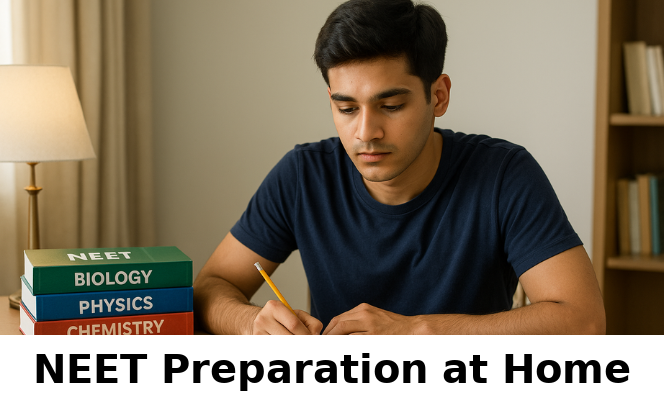
NEET is the only entrance exam for MBBS admissions in India. Whether a student wants a government or private seat, NEET is the key.
Here’s a parent-friendly explanation of how NEET works:
NEET Exam Overview
| Detail | Information |
| Exam Mode | Offline (Pen & Paper) |
| Total Marks | 720 |
| Questions | 200 (180 to be attempted) |
| Subjects | Physics, Chemistry, Biology (Botany + Zoology) |
| Duration | 3 hours 20 minutes |
| Marking | +4 for correct, –1 for wrong |
Biology carries the most weight (360 marks).
This is why most NEET toppers prioritise NCERT Biology early.
Syllabus Snapshot
- Physics: Mechanics, Thermodynamics, Optics, Electricity
- Chemistry: Organic, Inorganic, Physical Chemistry
- Biology: Human Physiology, Genetics, Botany, Zoology, Ecology
NEET Cut-Off Trend (Past 3 Years)
| Category | 2022 | 2023 | 2024 |
| General | 715-117 | 720-137 | 720-164 |
| OBC/SC/ST | 116-93 | 136-107 | 163-129 |
The cut-off rises when the paper is easy and drops when it’s tough.
Step-by-Step Admission Process for MBBS in India
Families often get anxious after NEET results because the counselling system feels complicated. Here is a simple breakdown to help you understand the journey clearly.
1. NEET Registration & Exam
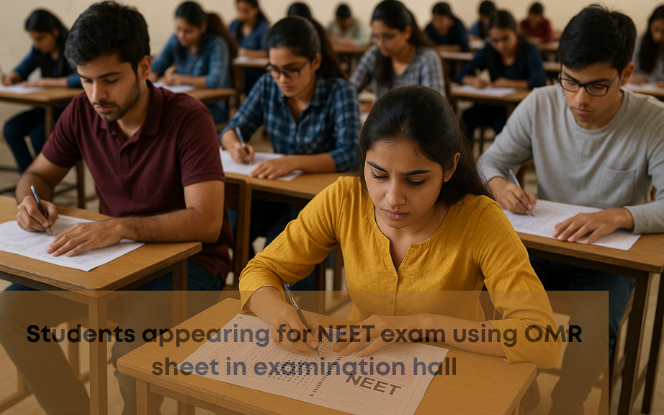
Students apply, appear for the NEET exam, and wait for results.
2. NEET Result & Rank
NTA releases rank, scorecard, and qualifying status. Rank matters more than raw marks.
3. Counselling Registration
There are two main counselling systems:
| Type of Seats | Conducted By | Includes |
| All India Quota (AIQ) – 15% Govt Seats | MCC | Govt colleges nationwide, AIIMS, JIPMER, Deemed, Central Universities |
| State Quota – 85% Govt Seats | State Authorities | Govt & Private colleges in your own state |
Most families apply for both, which increases chances.
4. Choice Filling
Students choose colleges in preference order.
This step needs smart planning — not guessing.
5. Seat Allotment
Based on NEET rank, reservation, and choice order.
6. Document Verification
Students must show original documents. Missing a single document can delay or cancel admission.
7. Reporting to College
Finally, pay fees and confirm your seat.

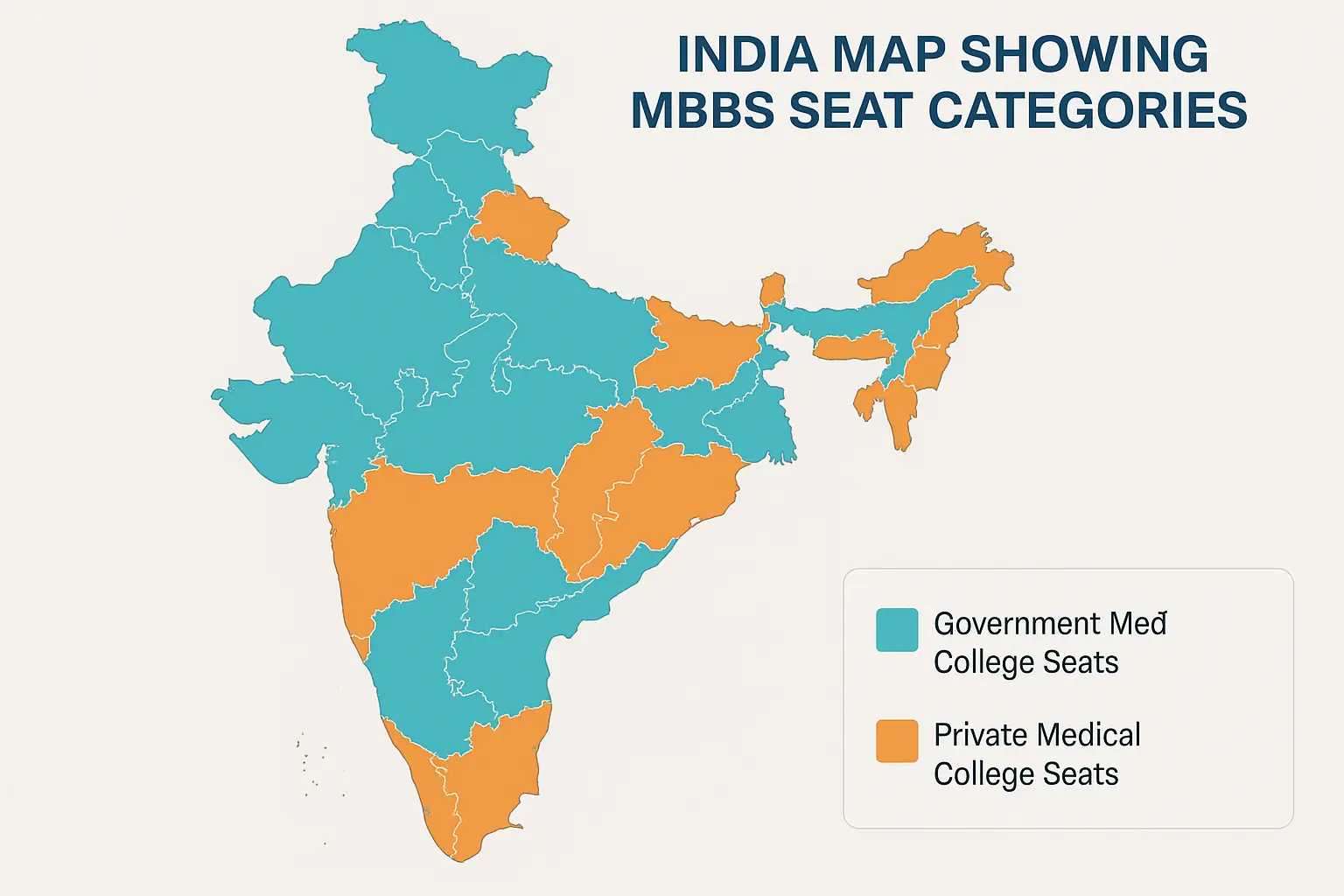
How MBBS Seats Are Distributed in India
Seat distribution often confuses students and parents, especially when they hear terms like AIQ, State Quota, Deemed, and NRI seats. Here’s a simple way to understand it:
Types of Seats in MBBS
| Seat Type | Who Can Apply | Notes |
| All India Quota (15%) | Students from any state | Includes Govt colleges across India |
| State Quota (85%) | Students of that state (domicile rule) | Only for Govt colleges of that state |
| AIIMS & JIPMER | All India basis | Through MCC counselling |
| Deemed Universities | All eligible NEET students | Higher fee structure |
| Private Medical Colleges | State counselling rules | Fees vary widely |
| NRI Quota | NRI/OCI candidates | Higher fees; special documents needed |
MBBS Fee Structure in India
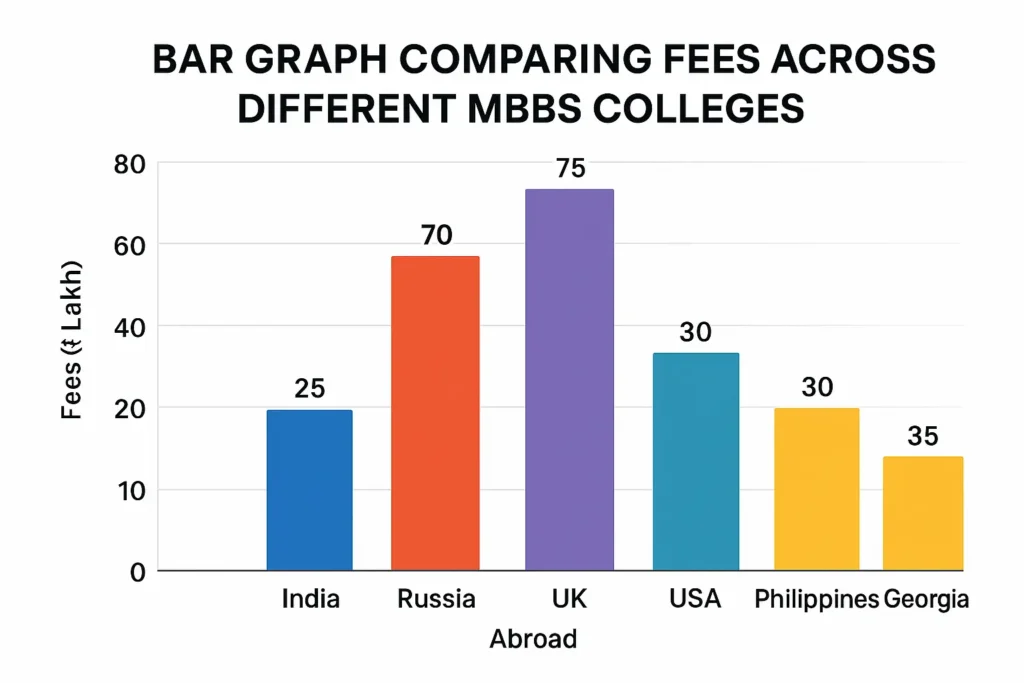
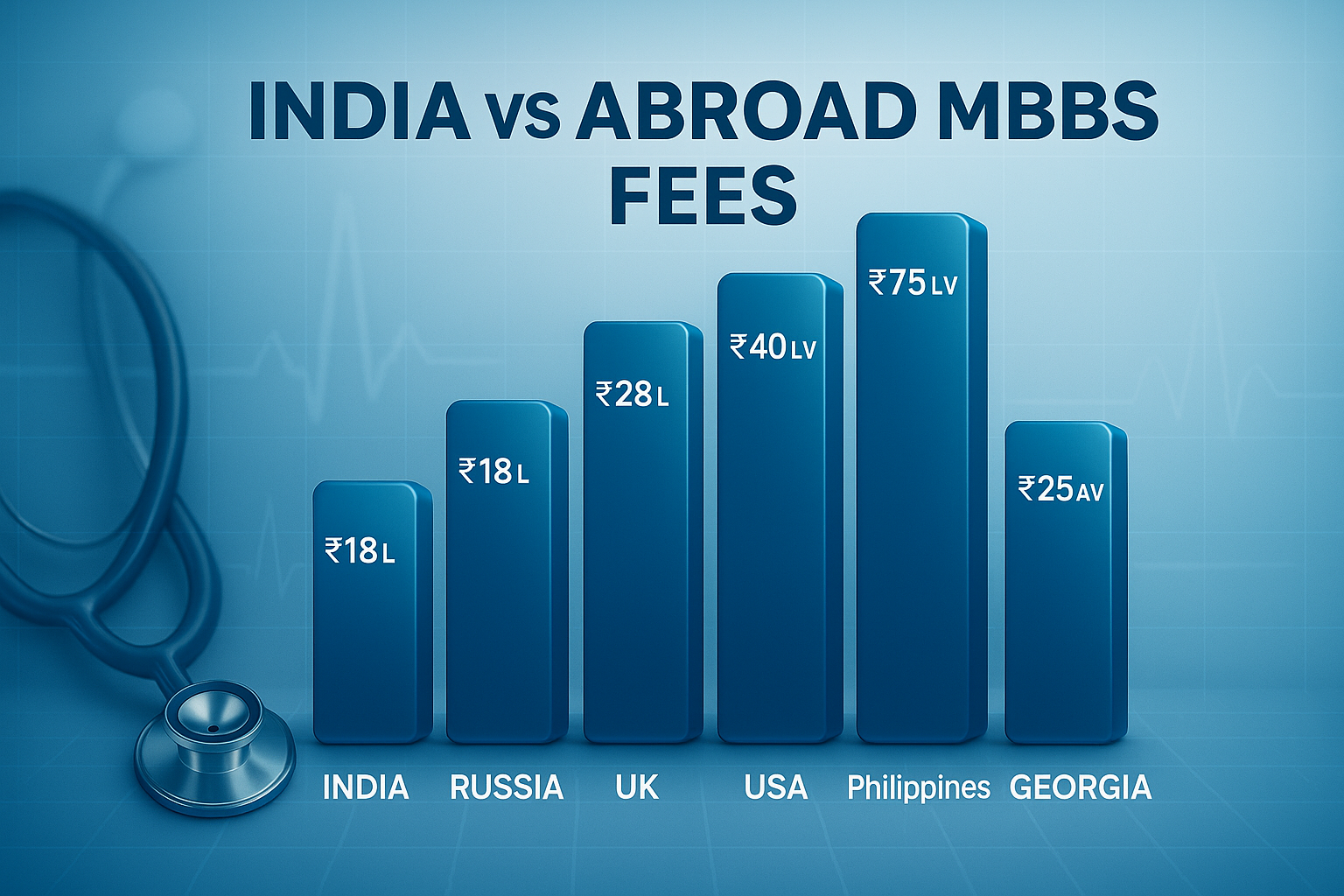
One of the biggest concerns for parents is: “How much will MBBS cost?”
Let’s keep it transparent and realistic. Fees depend on the type of college:
Government Medical Colleges
- Approx ₹50,000 to ₹2,50,000 for the entire 5.5 years
- Some states charge a small yearly fee + hostel and exam charges
Government seats are considered the most affordable and respected due to strong clinical exposure.
Private Medical Colleges
- Approx ₹12,00,000 to ₹25,00,000 per year
- Management quota can be higher
- Hostel, mess, and other costs are separate
Deemed Universities
- Approx ₹18,00,000 to ₹30,00,000 per year
- Higher because they follow university-decided fee slabs
AIIMS & JIPMER
AIIMS and JIPMER are surprisingly affordable:
- AIIMS: Around ₹6,000 for the entire course
- JIPMER: Around ₹12,000 (excluding hostel)
| College Category | Approx. Total Cost |
| Government | ₹50,000 – ₹2,50,000 |
| Private | ₹50,00,000 – ₹1,10,00,000 |
| Deemed Universities | ₹90,00,000 – ₹1,50,00,000 |
| AIIMS | ~₹6,000 |
| JIPMER | ~₹12,000 |
Reservation Policy for MBBS Admissions
Reservation ensures fair access to medical education. Here’s the current reservation structure for MBBS seats under All India Quota:
| Category | Reservation % |
| SC | 15% |
| ST | 7.5% |
| OBC-NCL | 27% |
| EWS | 10% |
| PwD | 5% (horizontal reservation) |
Top Medical Colleges in India
When choosing a college, look beyond the brand name. Consider patient flow, clinical exposure, faculty, safety, and internship opportunities. Here are some respected medical colleges across India:
Top Government Colleges
- AIIMS, New Delhi
- PGIMER, Chandigarh
- MAMC, New Delhi
- AFMC, Pune
- CMC, Vellore
- KGMU, Lucknow
Top Private Colleges
- Kasturba Medical College (KMC), Manipal
- St. John’s Medical College, Bengaluru
- JSS Medical College, Mysuru
- PSG Institute of Medical Sciences, Coimbatore
- Christian Medical College (CMC), Ludhiana
Documents Required for MBBS Admission
Keep these documents ready in a file to avoid last-minute panic:
Required Documents
- NEET Admit Card
- NEET Scorecard
- Class 10 & 12 Marksheet and Passing Certificates
- Transfer Certificate
- Migration Certificate (if applicable)
- Aadhaar/Passport/Voter ID
- Category Certificate (if applicable)
- PwD Certificate (if applicable)
- Passport-sized photographs
- Domicile Certificate (for State Quota)
NRI/OCI Candidates Must Add:
- Passport
- Visa & OCI Card
- Sponsorship Letter
- Proof of NRI Status
MBBS vs Other Medical Courses
Not securing an MBBS seat doesn’t mean the medical journey ends. There are other respected courses too:
| Course | Duration | Role |
| MBBS | 5.5 years | Doctor |
| BDS | 5 years | Dentist |
| BAMS | 5.5 years | Ayurvedic Doctor |
| BHMS | 5.5 years | Homeopathic Doctor |
| BPT | 4.5 years | Physiotherapist |
| B.Sc. Nursing | 4 years | Nurse/Healthcare |
| B.Pharm | 4 years | Pharmacist |
Challenges Students Often Face
- High competition: Lakhs of students for limited seats
- Pressure and expectations: From self, family, and society
- Confusion during counselling: Wrong choices lead to seat loss
- Fees: Heavy financial planning required for private seats
Smart Tips to Improve Your Chances
Here are simple yet effective tips many MBBS students wish they knew earlier:
- Start early with NCERT mastery
- Practise mock tests weekly
- Learn “exam temperament” — not just syllabus
- Keep documents ready
- Research colleges realistically
- Don’t copy others’ counselling list — choose based on your situation
Conclusion

Becoming a doctor is a noble dream, but the journey begins with understanding how MBBS admissions work. If you are a student, stay consistent and focused. If you are a parent, your emotional and moral support means more than you realise. The MBBS admission process may feel demanding at times, but thousands of students secure MBBS seats every year with the right information, clarity, and preparation.
This decision is not only about a medical career; it’s about the responsibility of handling human lives. So enter this MBBS journey with honesty and dedication.
FAQs
Is NEET compulsory for MBBS in India?
Yes, NEET-UG is mandatory for all MBBS admissions in India
Can I get MBBS with 300 marks?
Chances in Govt colleges are low. Private options may be possible depending on the state.
How many MBBS seats are there?
Over 1,08,000+ MBBS seats in India as of the latest update.
Is internship compulsory?
Yes, a 1-year internship is mandatory to get the MBBS degree.
Can I study MBBS abroad?
Yes, but you must clear NEET and later pass FMGE/NEXT exam to practice in India.
Yes, NEET-UG is mandatory for all MBBS admissions in India
Chances in Govt colleges are low. Private options may be possible depending on the state.
Over 1,08,000+ MBBS seats in India as of the latest update.
Yes, a 1-year internship is mandatory to get the MBBS degree.
Yes, but you must clear NEET and later pass FMGE/NEXT exam to practice in India.